
RFX Tools Explained: Supplier Bidding Platforms, RFP Software, and RFQ Automation

RFX tools are the engines behind modern sourcing events and procurement tender management. “RFX” covers requests for information, proposals, and quotations. Together, supplier bidding platforms, RFP software, and RFQ automation structure how organizations invite suppliers, compare options, and document decisions with audit-ready clarity. These tools reduce manual effort, improve competition, and create a consistent way to evaluate value, risk, and delivery capability.

  • Supplier bidding platforms: Centralize competitive events, from simple quote collections to complex auctions. They standardize timelines, rules, and communications, giving buyers and suppliers a shared view of requirements, milestones, and outcomes. The result is a transparent, fair process with traceable decisions.
  • RFP software: Best for complex categories where total value matters more than price alone. RFP workflows capture technical responses, service models, sustainability credentials, and commercial terms. Scoring models translate criteria into comparable supplier evaluations, enabling data-driven selection and clearer negotiations.
  • RFQ automation: Optimized for price-focused, specification-stable buys. RFQ tools automate request distribution, normalize quote formats, and highlight landed cost differences. They speed cycle times and reduce errors in repetitive or high-volume quoting.

Effective RFX execution depends on thoughtful design: clear specifications, risk and compliance questions, scoring weightings, and supplier feedback channels. When these elements are embedded, sourcing events produce reliable comparisons and defensible awards while improving supplier experience.

It is important to place RFX tools in the broader procurement architecture. ERP systems manage transactions like purchase orders and invoices. RFX platforms manage supplier selection during sourcing. Supplier Relationship Management (SRM) layers operationalize accountability after the award. Full-lifecycle SRM infrastructure, such as EvaluationsHub, converts RFX outcomes into supplier lifecycle visibility, enabling closed-loop supplier management, performance-driven supplier relationships, and end-to-end supplier governance.

Data continuity ties it all together. Information gathered during onboarding and RFX—capabilities, certifications, risk indicators, commercial commitments—feeds performance KPIs, issue management, and improvement actions. Over time, this supports cross-supplier benchmarking, structured supplier engagement models, and measurable supplier development. In short, supplier bidding platforms, RFP software, and RFQ automation deliver sourcing decisions; SRM turns those decisions into sustained results through governance, transparency, and continuous improvement cycles.

Designing Sourcing Events and Procurement Tender Management with Data-Rich RFX Workflows

Effective procurement tender management depends on well-designed sourcing events that use data-rich RFX workflows. When RFP software, RFQ automation, and supplier bidding platforms work together, they create standardized, comparable submissions while embedding governance and auditability. The goal is not just to pick a supplier, but to build a traceable foundation for performance, risk, and collaboration across the supplier lifecycle.

Design RFX packages to capture structured data that feeds both selection and later relationship management:

  • Scope and technical requirements with clear acceptance criteria
  • Commercial structures such as price tiers, volume breaks, cost elements, and total cost of ownership
  • Risk and compliance fields including certifications, ESG policies, information security, and HSE controls
  • Performance expectations such as SLAs, KPIs, service windows, and quality targets
  • Collaboration and governance terms covering reporting cadence, improvement cycles, and corrective actions
  • Supplier profile details on capabilities, capacity, references, and financial posture

Sourcing event design should be intentional and transparent. Key elements include:

  • Event strategy and lotting to enable competitive tension and scenario analysis
  • Weighted scoring models that blend price and non-price criteria for balanced outcomes
  • Standardized Q&A, clarifications, and time-boxed milestones for fairness
  • Approval workflows, time-stamped submissions, version control, and audit trails

RFQ automation ensures consistent line-item responses, validation of units and currencies, and optional alternative bids for innovation and value engineering. RFP software supports narrative responses, attachments, and cross-functional evaluations with structured scoring and consensus. Supplier bidding platforms provide a secure, fair, and transparent environment for submissions, enabling real-time status tracking and clear communication rules.

The value multiplies when RFX data flows into an SRM infrastructure layer such as EvaluationsHub. Awarded KPI targets become the baseline for scorecards. Risk declarations become monitored indicators. Commercial and service commitments convert into improvement actions with owners and timelines. Over time, this creates supplier lifecycle visibility, closed-loop supplier management, and performance-driven supplier relationships supported by cross-supplier benchmarking.

In the broader procurement architecture, ERP manages transactions, sourcing tools manage supplier selection, and SRM manages end-to-end supplier governance and collaboration. Data-rich RFX workflows connect these layers, enabling a structured supplier engagement model with performance transparency, governance, and continuous improvement grounded in the original tender.

Placing RFX in the Procurement Architecture: ERP Transactions, Sourcing Selection, and End-to-End Supplier Governance via SRM

In a modern procurement architecture, RFX tools sit between transactional processing and relationship governance. Enterprise Resource Planning (ERP) systems execute purchase orders, receipts, and invoices; sourcing events shape commercial choices through supplier bidding platforms, RFP software, and RFQ automation; and Supplier Relationship Management (SRM) sustains outcomes over time. The bridge between these layers is crucial. Effective procurement tender management generates structured data—prices, capabilities, service levels, and risk disclosures—that should feed directly into end-to-end supplier governance rather than ending at award.

  • ERP (transactions): Executes and records buying activity, ensures fiscal controls, and anchors auditability.
  • RFX and sourcing selection: Uses supplier bidding platforms, RFP software, and RFQ automation to run sourcing events, compare proposals, and document award rationales.
  • SRM (relationships and accountability): An infrastructure layer, such as EvaluationsHub, that converts RFX decisions into supplier lifecycle visibility, closed-loop supplier management, and performance-driven supplier relationships.

Data continuity is the operating principle that connects these layers. RFX outputs should become the initial baseline for performance and risk in SRM, linking onboarding data to measurable KPIs and improvement actions. Award rationales translate into scorecard criteria; negotiated commitments become tracked metrics; and risk responses turn into monitored indicators. This creates a structured supplier engagement model where governance is proactive, collaborative, and transparent across functions.

  • From RFX to SRM, key handoffs include:
  • Baseline KPIs and service levels derived from winning proposals.
  • Risk indicators and compliance attestations mapped to ongoing monitoring.
  • Improvement actions and milestones linked to corrective programs.
  • Supplier segmentation and benchmarking initiated from evaluation results.
  • Contractual obligations aligned with performance reviews and scorecards.

This architecture emphasizes complementarity, not replacement: ERP manages transactions; sourcing tools manage supplier selection; and a full-lifecycle SRM platform governs relationships, outcomes, and improvement. Positioned as the operational control layer, SRM provides unified supplier intelligence, performance transparency, and risk-aware collaboration—ensuring that the value created through RFX processes is sustained through continuous improvement cycles and measurable supplier value creation.

Converting RFX Outcomes into Supplier Lifecycle Visibility: Closed-Loop Supplier Management and Performance-Driven Supplier Relationships

RFX results carry more value than price points. When data from RFP software, RFQ automation, and supplier bidding platforms is converted into operational insights, organizations gain supplier lifecycle visibility and can run closed-loop supplier management. This shift connects sourcing events and procurement tender management with day-to-day performance, risk, and collaboration.

An SRM infrastructure layer such as EvaluationsHub serves as the operational control system that turns awarded bids into relationship outcomes. It links what suppliers promised during the event to how they perform, creating performance-driven supplier relationships built on shared evidence and continuous improvement.

  • Capture and normalize outcomes: Translate awarded prices, lead times, service levels, and scope into structured supplier records, scorecards, and governance plans.
  • Define measurable expectations: Convert bid commitments into clear KPIs and risk indicators, including delivery reliability, quality, cost trajectory, and sustainability metrics.
  • Establish shared performance visibility: Publish targets and baselines to both buyer and supplier, enabling transparent tracking, feedback, and accountability.
  • Run closed-loop governance: Schedule reviews, record actions, track corrective measures, and verify impact over time to ensure continuous improvement cycles.
  • Segment and benchmark: Compare suppliers across categories, identify relationship capital, and direct development resources where they create the most value.
  • Feed learning back to sourcing: Use historical benchmark data and improvement results to refine the next wave of sourcing events and procurement tender management decisions.

This data continuity spans the entire lifecycle: onboarding data informs prequalification, RFX outcomes define performance KPIs, ongoing monitoring reveals risk indicators, structured actions drive improvement, and historical benchmarking sustains long-term learning. The result is end-to-end supplier governance where selections made through RFP software and RFQ automation lead directly to measurable business outcomes.

In practice, this model enables unified supplier intelligence and performance-based collaboration. Buyers and suppliers operate from the same facts, discuss root causes earlier, and co-manage improvement programs with traceable results. Relationship orchestration replaces ad hoc escalation, strengthening governance and transparency without adding administrative burden.

By converting RFX outcomes into living scorecards, risk-aware engagement, and measurable supplier development, organizations move beyond transactional wins. They build a structured supplier engagement model that sustains value, reduces risk, and fuels closed-loop supplier management across the full lifecycle.

Enterprise Interoperability and Relationship Orchestration: Connecting RFX to EvaluationsHub, SAP, and Salesforce for a Structured Supplier Engagement Model

Modern procurement depends on systems that interoperate while serving distinct roles: ERP platforms like SAP execute transactions, RFX tools (RFP software, RFQ automation, and supplier bidding platforms) drive supplier selection, and an SRM layer such as EvaluationsHub orchestrates relationships and improvement over time. Connecting these layers creates a structured supplier engagement model that turns sourcing events and procurement tender management into performance-driven supplier relationships.

Interoperability ensures data continuity across the supplier lifecycle. Award decisions, cost models, and evaluation notes from RFX workflows flow into EvaluationsHub to establish initial expectations and governance. Transactional data from SAP (orders, receipts, quality incidents, invoice accuracy) then enriches performance KPIs. Collaboration signals from Salesforce (campaigns, escalations, joint programs) provide context for engagement. Combined, these streams create unified supplier intelligence, enabling supplier lifecycle visibility and closed-loop supplier management.

  • From RFX to SRM: RFP software and RFQ automation pass award rationales, scoring matrices, and total cost outcomes to initialize objectives, risks, and service-level expectations for each supplier.
  • From SAP to SRM: Delivery, quality, compliance, and cost-to-serve metrics feed recurring scorecards, turning transactions into measurable performance accountability.
  • From Salesforce to SRM: Stakeholder engagement, issue resolution, and joint improvement initiatives synchronize as structured feedback loops and action plans.
  • Back to the enterprise: EvaluationsHub publishes performance KPIs, risk indicators, and improvement status to SAP and Salesforce, promoting governance and shared performance visibility between buyer and supplier.

This integration pattern supports end-to-end supplier governance. It links onboarding data to performance KPIs, ties risk indicators to improvement actions, and preserves historical benchmarking across categories and regions. The result is relationship orchestration: cross-supplier benchmarking informs segmentation, structured improvement tracking sustains continuous improvement cycles, and risk-aware relationship management aligns internal stakeholders with suppliers on clear objectives.

By sitting above transactional systems, the SRM lifecycle platform complements—rather than replaces—ERP and sourcing tools. Supplier bidding platforms optimize competitive selection; SAP executes the awarded work; EvaluationsHub maintains the ongoing accountability model. For organizations advancing from digital sourcing toward structured SRM governance and full lifecycle supplier relationship orchestration, this architecture enables data-driven supplier governance, performance-based collaboration, and measurable supplier development that persist long after the sourcing event concludes.
The Ultimate RFP Checklist Excel for Purchasing Managers

Are you a purchasing manager looking to streamline your RFP process? Whether you’re sourcing software, services, or strategic suppliers, a well-structured RFP can make or break your procurement success. That’s why we created the RFP Master Checklist Excel: a premium, multi-sheet template designed to guide you from planning to award.


🚀 Why This RFP checklist in Excel Stands Out

Unlike basic templates, this Excel is:

  • Professionally formatted with conditional formatting, filters, frozen panes, and styled tables.
  • End-to-end: Covers every phase from preparation to transition.
  • Automated: Includes formulas for overdue tasks, days remaining, and scoring.
  • Governance-ready: Tracks RACI roles, risks, approvals, and supplier compliance.
  • Dashboard-powered: Live KPIs and a pie chart update as you work.


📋 What’s Inside the RFP Master Checklist

1. Checklist Sheet

A comprehensive task list across all RFP phases:

  • Preparation
  • Requirements gathering
  • Market sounding
  • RFP drafting
  • Approvals
  • Issuance
  • Supplier Q&A
  • Evaluation
  • Negotiation
  • Award
  • Contracting
  • Transition


Each task includes:

  • RACI columns (Responsible, Accountable, Consulted, Informed)
  • Priority and status dropdowns
  • Start and due dates
  • Automatic overdue flags


2. Dashboard

Real-time metrics:

  • Total tasks
  • % complete
  • Status breakdown (Done, In Progress, Blocked, Not Started)
  • Overdue count

Includes a dynamic pie chart and summary notes.

3. Scoring Matrix

Weighted evaluation criteria:

  • Commercial
  • Technical
  • Service
  • Risk
  • Sustainability
  • Strategic alignment

Supports up to 3 suppliers with auto-calculated weighted scores.


4. Supplier Compliance Tracker

Log:

  • NDA status
  • Minimum requirement checks
  • Conflict of interest
  • Diversity category
  • Kraljic criticality


5. Risk Register

Score risks by likelihood × impact, with color-coded heat mapping.

6. Timeline Sheet

Track milestone dates and calculate delays automatically.

7. Q&A Log

Maintain a publishable audit trail of supplier questions and your responses.

8. Evaluation Team Sheet

Track roles, scoring rights, and COI sign-off.

9. Documents & Approvals

Version control, approval status, and links to key files.

10. ReadMe Sheet

Quick tips and credits — including a mention of EvaluationsHub, the SRM platform powering smarter sourcing.

🧠 Built by EvaluationsHub

This template is curated by EvaluationsHub, a supplier relationship management platform built for mid-market and enterprise procurement teams. EvaluationsHub offers end-to-end supplier lifecycle management tools for SRM:
  • Native ERP integrations
  • Supplier portals for RFx

🔗 Download the Template

Get your copy of the RFP Master Checklist Excel here: RFP_Master_Checklist_EvaluationsHub

💡 Final Thoughts

Whether you’re running a complex IT RFP or sourcing indirect services, this Excel gives you structure, visibility, and control. It’s not just a checklist — it’s a full RFP operating system.
Try it, customize it, and win your next sourcing project with confidence.

🔄 Full Supplier Lifecycle Management: From First Bid to Final Offboarding with EvaluationsHub

Procurement leaders know that managing suppliers isn’t just about awarding contracts. It’s about building strong, transparent, and sustainable relationships throughout the entire supplier journey. Yet, too often, teams are stuck with fragmented tools: one for sourcing, another for onboarding, and endless spreadsheets for performance and compliance.

At EvaluationsHub, we believe supplier management should be continuous, integrated, and effortless. That’s why we’re proud to introduce our full lifecycle supplier management capabilities — giving you one seamless workflow from first sourcing event to final offboarding.


1️⃣ Sourcing: Find the Right Partners, Fast

Every relationship starts with a sourcing decision. With EvaluationsHub, sourcing goes beyond price:

  • Run RFPs, RFQs, and RFIs with custom categories and weightings.

  • Collect inputs from cost models, certifications, surveys, and stakeholder feedback.

  • Score suppliers objectively with aggregated dashboards.

  • Provide suppliers with a branded portal for a professional and transparent experience.

👉 Instead of chasing documents and emails, procurement teams get a structured, auditable sourcing process that accelerates decision-making.

2️⃣ Onboarding: Seamless and Self-Service

Once a supplier is selected, onboarding is often where friction begins. Our Supplier Information Management (SIM) makes it easy:

  • Suppliers upload and maintain their own certifications, insurances, and documents.

  • A dynamic org chart view maps responsibilities and contact persons.

  • Automated workflows ensure all compliance requirements are met before a supplier is activated.

The result: onboarding that’s faster for procurement and more professional for suppliers.


3️⃣ Performance & Risk: Keep Track of What Matters

Supplier management isn’t “set and forget.” EvaluationsHub enables continuous performance tracking with both quantitative and qualitative inputs:

  • Link spend data, contract compliance, and KPIs.

  • Gather feedback from meetings, surveys, and audits.

  • Track certifications and ESG compliance in real time.

  • Spot risks early with alerts for expiring documents or missed performance thresholds.

This creates a 360° view of each supplier — ensuring procurement leaders always know where they stand.

4️⃣ Contracts & Spend: Control Without Complexity

Suppliers deliver value through agreements. With our lightweight spend and contract tracking:

  • Every supplier has a clear spend overview.

  • Contracts are securely stored with a full audit log.

  • Renewal reminders ensure no surprises from expired agreements.

This means procurement stays in control without the complexity of heavy, siloed spend tools.

5️⃣ Offboarding: End Relationships Smoothly

When a supplier relationship ends, offboarding should be as structured as onboarding:

  • Archive contracts and spend data for audit readiness.

  • Retain performance and risk records for future reference.

  • Ensure compliance by confirming all obligations are closed.

Instead of gaps and forgotten details, EvaluationsHub gives procurement a clean, professional offboarding process that protects both the business and the brand.

🌍 Why Lifecycle Management Matters

A supplier relationship is a journey. By managing it holistically:

  • Procurement can defend every decision with data.

  • Suppliers experience clarity and professionalism at every stage.

  • Organizations build a resilient, compliant, and innovative supply base.

With EvaluationsHub, lifecycle management isn’t fragmented. It’s end-to-end, integrated, and future-ready. EvaluationsHub moved from being a very strong supplier performance management tool to an end-to-end Supplier Relationship Management (SRM) tool.

RFx processes (RFI, RFP, RFQ) Automated by EvaluationsHub

In procurement and supplier management, every decision counts. The right supplier can unlock long-term value, while the wrong one can create hidden risks and costs that ripple through the business. For decades, organizations have relied on RFx processes (RFI, RFP, RFQ) to create structure and comparability in sourcing decisions. But let’s face it: too often, these processes are cumbersome, one-dimensional, and disconnected from the broader supplier relationship management journey.

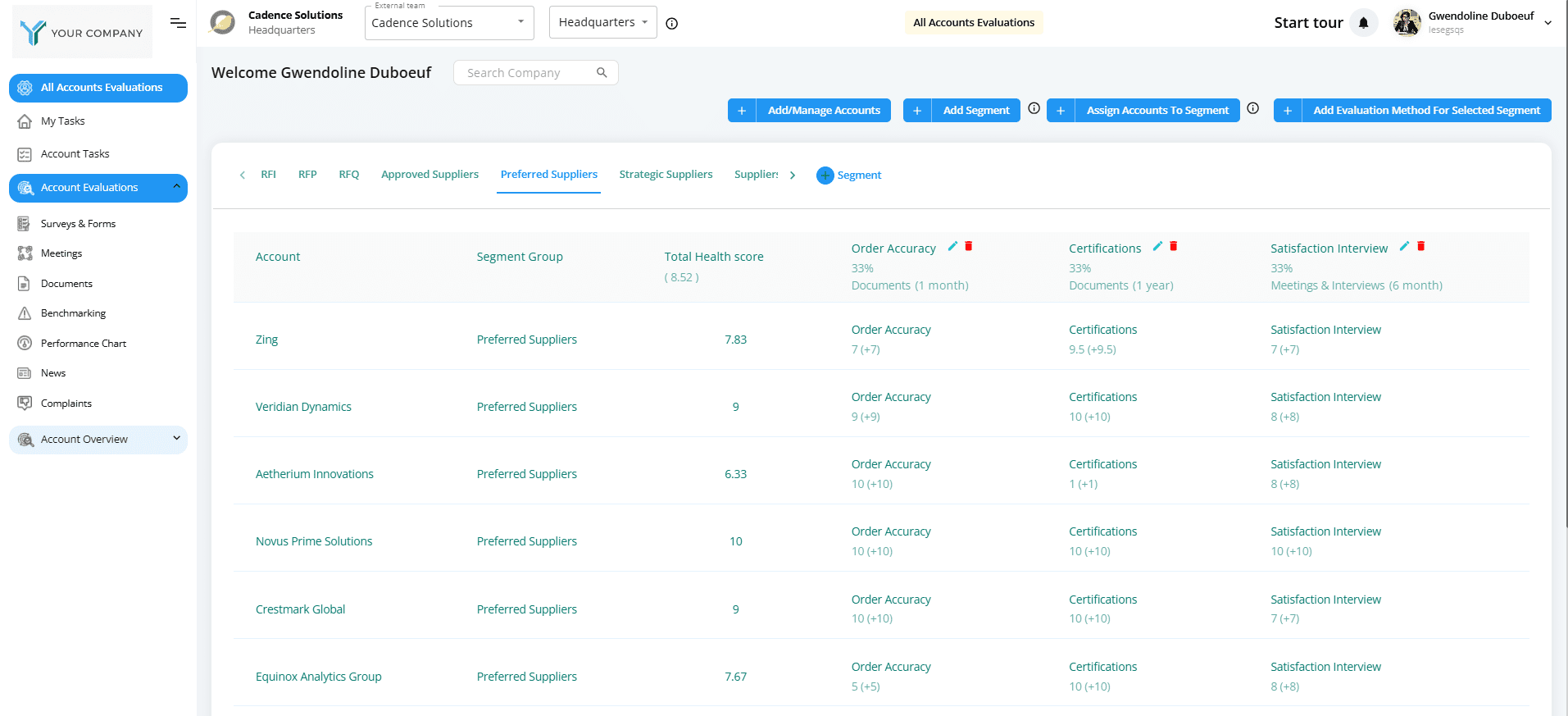
That’s why we’re thrilled to announce our latest release: Integrated RFx Management in EvaluationsHub. With this launch, we’re transforming how organizations design, run, and evaluate RFx processes—bringing in richer data, supplier collaboration, and actionable scoring that moves beyond simple price comparison.

This isn’t just another tool for running RFPs. It’s a smarter way to source, one that reflects the reality of modern procurement: multi-dimensional, data-driven, and relationship-centric.


Why RFx Needs Reinvention

Traditional RFx workflows often fall short for three reasons:

  1. Overemphasis on price. Too many decisions are reduced to cost, ignoring qualitative factors like innovation, sustainability, or supplier reliability.

  2. Fragmented inputs. Information is scattered across emails, spreadsheets, PDFs, and meetings—making it difficult to synthesize into a clear decision framework.

  3. Poor supplier experience. Suppliers often feel like they’re submitting into a black box, with little transparency or engagement.

The result? Suboptimal supplier choices, higher switching costs, and relationships that start off transactional instead of collaborative.

At EvaluationsHub, we believe sourcing deserves better. Our new RFx module doesn’t just digitize old processes—it elevates them.


Categories: Organize What Matters

Not all suppliers are equal—and not all categories are either. Our RFx release allows procurement teams to design sourcing events by category, ensuring apples-to-apples comparisons within defined scopes.

Whether you’re running an RFQ for logistics providers, an RFP for IT services, or an RFI for sustainability partners, you can tailor categories with weighted criteria that reflect your business priorities.

For example:

  • In logistics, on-time delivery and cost per shipment might be critical.

  • In IT services, innovation capability and security certifications could matter more.

  • In packaging, sustainability metrics may carry top weight.

By structuring sourcing around categories, you avoid one-size-fits-all templates and create decisions that align with strategy, not just spreadsheets.


Supplier Progression: Move the Right Partners Upstream

A key feature of EvaluationsHub’s RFx is the ability to move suppliers up through the sourcing process—from broad RFI discovery to targeted RFP competition to final RFQ negotiations.

This progression is not static. Based on scoring and evaluations, suppliers can move forward—or fall back—giving you a dynamic, transparent funnel that ensures only the most qualified suppliers reach the finish line.

Think of it as pipeline management for suppliers: you start broad, filter intelligently, and end with the best match. It’s faster, fairer, and ultimately more effective than manual shortlisting.


Branded Supplier Portal: Make It Collaborative

Suppliers don’t want to feel like nameless bidders. They want to engage, showcase their strengths, and understand what matters most to you. That’s why EvaluationsHub includes a branded supplier portal for RFx events.

With your company’s identity front and center, suppliers log into a professional portal where they can:

  • Submit proposals, documents, and certifications

  • Respond to surveys or questionnaires

  • Track their progress in the sourcing process

  • Engage in structured Q&A and meeting requests

The result? Professionalism meets collaboration. Suppliers see your sourcing process as transparent and well-structured, while you gain more complete and consistent inputs.


Beyond Price: Multi-Source Input for a Complete View

Procurement isn’t just about comparing bids. It’s about evaluating total value.

That’s why EvaluationsHub RFx goes beyond basic proposal collection. Our module allows you to capture input from multiple sources, both quantitative and qualitative:

  • TCO Documents: Import and standardize total cost of ownership data.

  • Meetings: Log and weight supplier meetings or presentations.

  • Surveys: Capture structured feedback from cross-functional stakeholders.

  • Certifications: Validate compliance with industry standards or sustainability goals.

  • Historical Performance: Integrate past scorecards, audits, or KPIs.

Every one of these inputs feeds into the same framework, ensuring decisions are based on evidence, not intuition.


Aggregated Scoring: One View That Brings It All Together

The challenge in sourcing isn’t lack of data—it’s too much data in too many places.

EvaluationsHub solves this by aggregating all inputs into a single supplier score, visualized in intuitive dashboards. Each criterion—price, quality, sustainability, service levels, certifications—carries the weight you assign.

The result is a transparent, defendable score that makes decisions easier to justify, both internally and to suppliers.

Imagine walking into a steering committee not with messy spreadsheets, but with a clear ranking of suppliers supported by both hard data and stakeholder input. That’s the power of aggregated scoring.


What This Means for Procurement Leaders

With EvaluationsHub RFx, you gain:

  • Speed: Automate supplier progression and scoring to cut cycle times.

  • Fairness: Ensure consistent evaluation criteria across all suppliers.

  • Transparency: Provide suppliers with a professional, branded experience.

  • Strategic value: Move beyond cost to include qualitative and strategic dimensions.

  • Defensibility: Back every sourcing decision with data-rich, aggregated scores.

In short: you elevate sourcing from an administrative burden to a strategic advantage.


A Day in the Life with EvaluationsHub RFx

Let’s bring it to life.

You’re a procurement manager sourcing a new facilities services partner. Here’s how it plays out:

  1. Define categories and criteria. You create an RFP under the “Facilities” category, weighting service quality (40%), cost (30%), and sustainability practices (30%).

  2. Launch supplier portal. Suppliers log into your branded portal, where they upload proposals, certifications, and respond to tailored questionnaires.

  3. Engage stakeholders. Your internal teams score qualitative factors through surveys, while finance uploads TCO models.

  4. Meetings and reviews. Shortlisted suppliers are invited to meetings, which are logged and scored directly in the platform.

  5. Aggregated scoring. EvaluationsHub brings all inputs into a single supplier score, ranking suppliers transparently.

  6. Decision and communication. You present results with data-rich dashboards and notify suppliers through the same portal—closing the loop with professionalism and clarity.

What once took weeks of emails, spreadsheets, and debates is now a structured, data-driven process that saves time and builds confidence.


Evaluationshub RFx Tool as Part of the Bigger Picture

This release is not a standalone feature—it’s part of our broader mission at EvaluationsHub: to help organizations manage supplier performance, risk, compliance, and relationships in a unified way.

RFx is where supplier relationships often begin. By integrating sourcing into the same platform that tracks ongoing performance, corrective actions, and collaboration, you create continuity across the entire supplier lifecycle.

Suppliers don’t just “win” a contract—they become part of a managed, data-rich relationship that evolves over time.


Ready to Elevate Your Sourcing?

Procurement teams everywhere are under pressure to deliver more: lower costs, more innovation, stronger resilience, and better sustainability outcomes. RFx is where many of those challenges converge.

With EvaluationsHub’s RFx module, you can:

  • Run sourcing processes that are structured, transparent, and fair

  • Capture both quantitative and qualitative inputs

  • Aggregate everything into a single, defensible score

  • Deliver a professional, branded supplier experience

It’s time to move sourcing out of spreadsheets and into the future.

Schedule a demo today and see how EvaluationsHub can transform your RFx process.